

Bogor, 16 December 2025 Imagine standing at the crossroads of a fast-paced world: on one side, the relentless roar of information pushing for speed and volume; on the other, the quiet glow of dusk reminding us of eternal truth. As a journalist, you are more than just a “news bearer” — you are a bridge between facts and understanding, between chaos and clarity. At its core, a strong work ethic is not merely a set of rules — it is a way of life rooted in the Word of God (the Bible), guided by fair professional regulations, and aligned with the wisdom of Javanese proverbs.
1. Accuracy: “Do Not Speak Falsehood, for Truth Is Light”
The Bible clearly reminds us of the importance of truth:
“Do not join the wicked and be a liar; do not associate with those who tell lies” (Psalm 50:19).
Nothing is “cooler” than having the courage to stand on the foundation of truth, even when the world pressures you to be fast and careless. Every word you write or speak is a light you shine for the public — a single error can turn that light into fog.
This aligns with the Javanese proverb “Basa wedih, basa wedi” — careless words will bring fear or trouble. From a regulatory standpoint, Law Number 40 of 1999 on the Press (Press Law) Article 1 states that journalists must act accurately and balanced when writing news. Meanwhile, the Indonesian Journalistic Code of Ethics (KEJI) — the official ethical guideline for journalists in Indonesia — Articles 1 and 3 emphasize the need to verify information repeatedly and ensure its truth before publication. Additionally, Press Council Regulation No. 1/Regulation-DP/I/2025 on Guidelines for the Use of Artificial Intelligence (AI) in Journalistic Works mandates that all AI-generated information must undergo verification and fact-checking to avoid misleading the public. This is a philosophy: accuracy is not just a task, but a form of worship to the truth taught in John 8:32: “Then you will know the truth, and the truth will set you free”.
2. Objectivity: “See with Your Own Eyes, Do Not Let Your Heart Deceive You”
There are times when our emotions run high — anger at injustice, sadness at suffering. But the Bible warns us not to be trapped by excessive emotion:
“Do not be quickly provoked in your spirit, for anger resides in the lap of fools” (Psalm 76:10).
As a journalist, you are a responsible observer: report what happens, not what you want to happen. Press Law Article 3 Paragraph (1) affirms the press’s role as a social control medium that must be neutral and objective. Meanwhile, KEJI Article 3 states that journalists must not mix facts with judgmental opinions and must apply the presumption of innocence. The Press Council also strictly emphasizes that the press must be independent and objective, especially in covering elections or regional head elections, and must not take sides with any candidate.
The corresponding Javanese proverb is “Ojo didhelikake, ojo didolake” — do not hide (facts) and do not deceive (with bias). Its philosophy is rooted in Psalm 119:130: “The unfolding of your words gives light; it gives understanding to the simple” — meaning clear facts (not bias) must be the guide.
3. Honesty: “Honesty Is a Crown, Deceit Is a Trap”
Honesty is an irreplaceable foundation, as taught in:
“Whoever walks in integrity walks securely, but whoever takes crooked paths will be found out” (Proverbs 10:9).
There are no “tricks” or “shortcuts” that can replace honesty — when you lie, the first person you deceive is yourself. Admit mistakes when they happen and correct them quickly — this is not a sign of weakness, but true courage, in line with James 5:16: “Therefore confess your sins to each other and pray for each other so that you may be healed”.
This matches the Javanese proverb “Beneran iku seneng, bohong iku lara” — honesty brings peace, deceit brings pain. From a regulatory perspective, KEJI Article 2 prohibits plagiarism, data fabrication, and misquotation, while Press Law Article 4 Paragraph (3) guarantees the press’s right to seek information honestly and transparently. The Press Council also regulates that in using AI, media must be transparent by clearly disclosing if the technology is used in content creation, to maintain public trust. This philosophy: honesty is an expression of respect for Psalm 15:2: “The one whose walk is blameless, who does what is righteous, who speaks the truth from their heart”.
4. Responsibility: “You Are a Mandated Protector, Do Not Let Them Be Harmed”
The Bible teaches us to protect the weak and oppressed:
“Learn to do right; seek justice. Defend the oppressed. Take up the cause of the fatherless; plead the case of the widow” (Isaiah 1:17).
As a journalist, you have power — the power to make people heard, but also the power to hurt. Avoid violating privacy, especially for victims of crime or disaster. Do not treat other people’s suffering as “news material” just to attract attention.
Press Law Article 5 emphasizes the need for child-friendly reporting and respect for human dignity. Meanwhile, KEJI Article 2 Paragraphs (b) and (f) also prohibit privacy violations and require respect for sources’ traumatic experiences. The Press Council also reminds press companies to be obligated to provide legal protection for journalists in carrying out their duties, and to have mechanisms for addressing violence against journalists. The fitting Javanese proverb is “Ojo ngomong omong, ojo ngrusak tembang” — do not speak carelessly, do not destroy what is beautiful (human dignity). This aligns with Genesis 1:27: “So God created mankind in his own image, in the image of God he created them; male and female he created them” — every person is a precious creation of God, and your duty is to protect their dignity.
5. Competence: “Train Yourself Like a Soldier Ready for Battle”
The Bible calls us to continue growing and be wise in our work:
“Therefore, my brothers and sisters, be eager to prophesy, and do not forbid speaking in tongues. But everything should be done in a fitting and orderly way” (1 Corinthians 14:39-40) — and more directly, Acts 6:3: “Brothers and sisters, choose seven men from among you who are known to be full of the Spirit and wisdom. We will turn this responsibility over to them”.
Nothing is “cooler” than a journalist who masters their field — one who understands context and can analyze carefully. Keep learning, hone your skills, and keep up with technological developments — in line with 1 Corinthians 9:24: “Do you not know that in a race all the runners run, but only one gets the prize? Run in such a way as to get the prize”.
KEJI Article 2 states that journalists must carry out their duties professionally. Additionally, Press Council Regulation No. 1/Regulation-DP/X/2018 on Journalist Competency Standards regulates the basic skills that journalists must have at various levels (junior, middle, senior), including data collection, editing, and in-depth or investigative reporting. The corresponding Javanese proverb is “Sinau terus-terusan, ngerti saben hari” — learn continuously, understand every day. Regulations also require journalists to keep improving their abilities. This philosophy: competence is an expression of respect for your calling — you must not waste the gift given by God.
In the end, a strong journalist’s work ethic is a blend of spiritual calling (based on the Bible), professional responsibility (based on the Press Law, KEJI, and Press Council regulations), and local wisdom (contained in Javanese proverbs). You are someone who stands between heaven and earth — bringing truth from heaven to earth, and ensuring that every word you utter is a light that illuminates the path for society. That is what makes your work truly cool — not because you are famous, but because you have a positive impact on the world you serve.
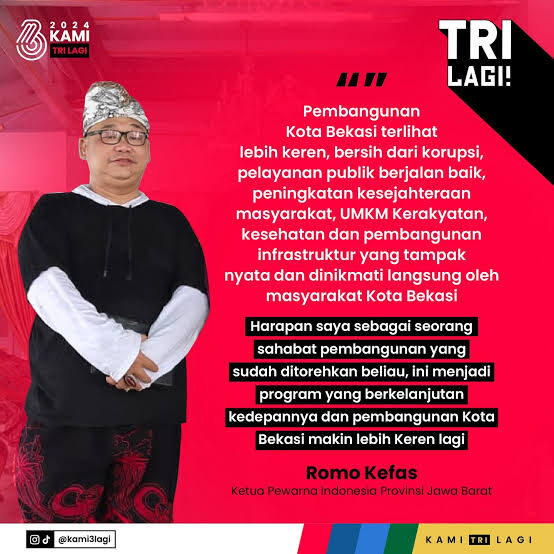
Written by: Kefas Hervin Devananda (Romo Kefas), Senior Journalist at Pewarna Indonesia